New IEEE Xplore Engineering eBooks Offer Practical Insights for Busitema University Research
4 November 2026
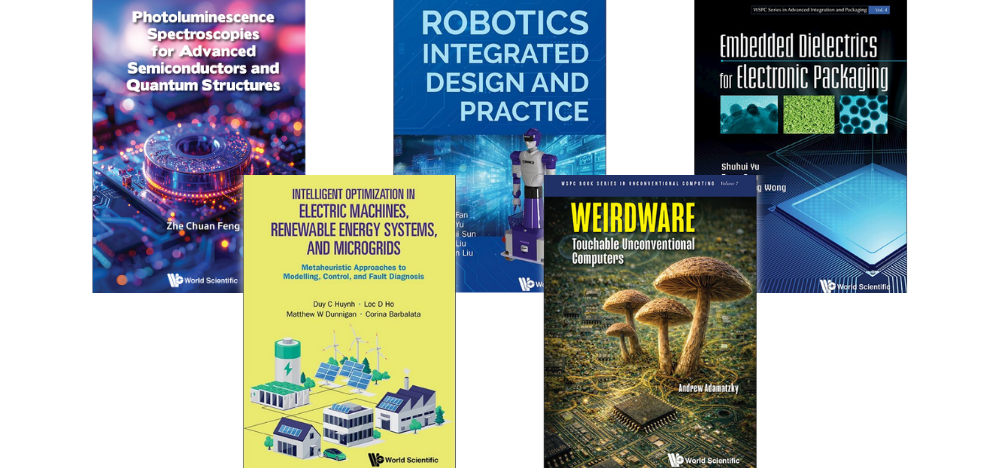
IEEE has introduced more than 275 engineering eBooks through its IEEE Xplore Digital Library, bringing together technical knowledge in artificial intelligence, robotics, control systems and other fields closely related to research and training at Busitema University.
The World Scientific Engineering eBooks Library, announced on August 18, 2026, contains professional and reference publications dating back to 2011. Its emphasis on applying engineering principles to practical problems makes the collection relevant to the University's work in agricultural mechanisation, irrigation, computing and technological innovation.
At Busitema University's Faculty of Engineering and Technology, agricultural mechanisation and irrigation engineering involves designing and improving equipment used in agricultural production. A student developing an automated irrigation system, for instance, must understand how sensors, electronic components and control mechanisms work together. Technical literature on control systems and electronics can help explain these relationships, guide the selection of appropriate technologies and support the testing of designs under different operating conditions.
Similar applications arise in artificial intelligence and computer engineering, where turning a working computer model into a reliable physical system presents challenges beyond programming. Publications on robotics, intelligent systems and human-robot interaction can help students investigate how machines interpret information, respond to changing conditions and operate safely. Such knowledge can strengthen practical assignments, final-year projects and postgraduate research.
The collection also presents opportunities to examine existing engineering approaches before developing new ones. Researchers investigating agricultural automation, machine performance or intelligent monitoring systems can draw on relevant publications to compare methods, identify limitations and refine their research questions. Understanding how other engineers have approached similar problems is especially useful when adapting technologies to Uganda's agricultural and industrial conditions.
Academic staff can incorporate engineering case studies and technical reference materials into teaching, giving students opportunities to evaluate real-world design decisions rather than relying entirely on theoretical exercises. Discussions around equipment performance, system reliability and technological limitations can also strengthen project supervision and encourage more rigorous experimentation.
Beyond the classroom, the knowledge covered by the collection has potential applications in communities where affordable engineering solutions are needed. Improved irrigation controls, automated processing equipment and monitoring technologies could help address challenges faced by farmers and small-scale enterprises. Developing such solutions requires researchers to consider local conditions, maintenance