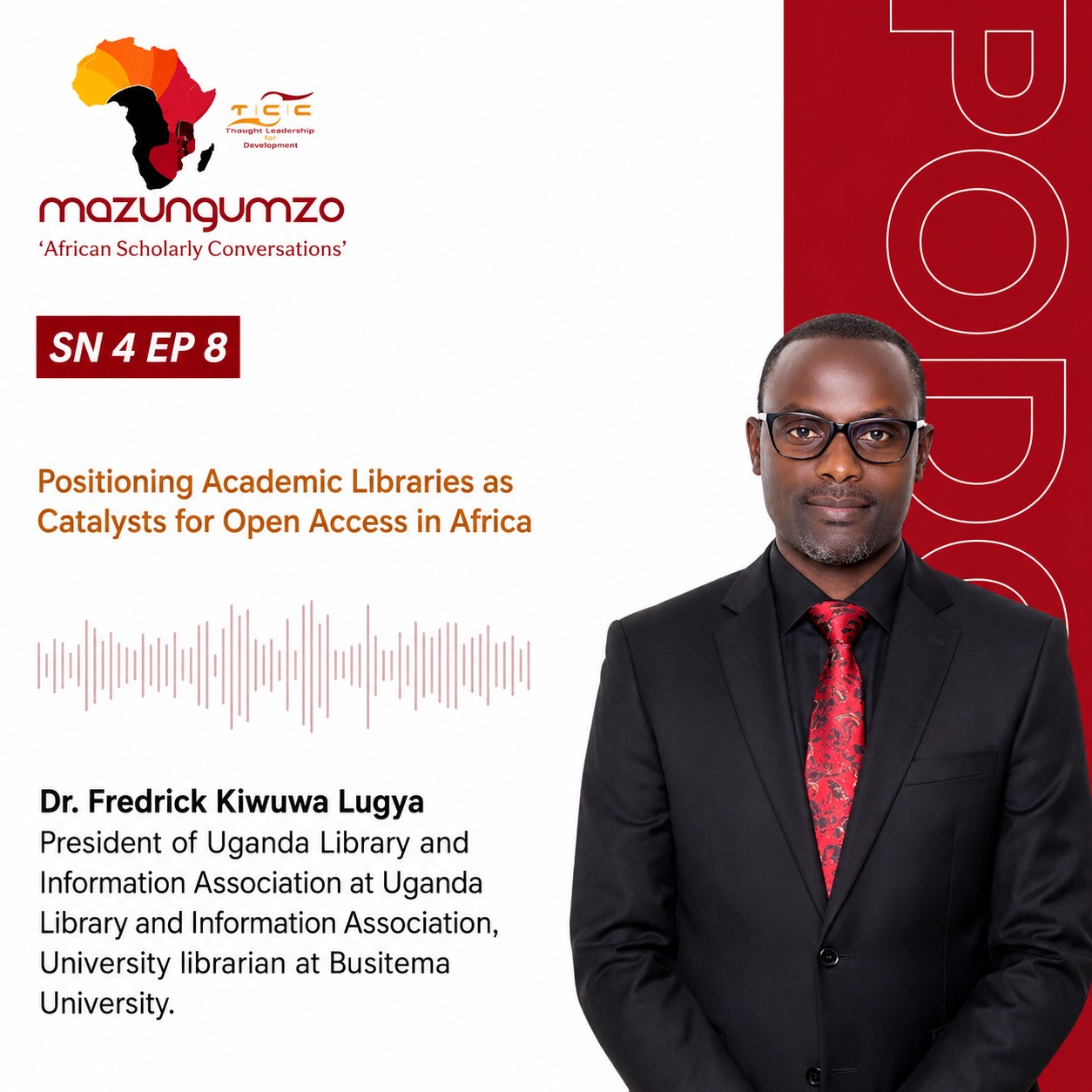
Let’s Talk Open Access: A Conversation with ULIA’s Own Dr. Fredrick Lugya
Have you ever wondered what happens to all the brilliant research produced by Ugandan scholars after it’s published? Too often, it ends up behind expensive paywalls, locked away in international journals that most of our own citizens, policymakers, and even local university students cannot afford to access. It’s a frustrating paradox: publicly funded research that the public cannot read.
That’s exactly the problem Dr. Frederick Kiwuwa Lugya, President of ULIA and University Librarian at Busitema University, sat down to unpack on a recent episode of Mazungumzo - African Scholarly Conversations, one of Africa’s leading podcasts on scholarly communication.
And honestly? His message is one every Ugandan should hear.
A Librarian’s 20-Year Journey to Open Science
The episode—Season 4, Episode 8, titled Positioning Academic Libraries as Catalysts for Open Access in Africa, feels less like a formal interview and more like a fireside chat between colleagues. Hosted by Joy Owango of the Training Centre in Communication (TCC Africa), the conversation draws out Dr. Lugya’s twenty-year journey in librarianship. He doesn’t just talk about shelving books or managing databases. Instead, he invites us to see academic libraries as something far more powerful: catalysts for change.
“We are not just keepers of knowledge,” Dr. Lugya says during the episode. “We are bridges.”
And bridges, he explains, are exactly what Uganda needs if we are serious about connecting homegrown research to homegrown solutions.
Why Open Access Matters Right Now
Let’s be real. For years, Ugandan universities have paid millions of shillings in foreign currency to access journals produced in the Global North. Meanwhile, a local researcher studying maize disease or maternal health can’t share their findings freely with the very farmers or clinics who need that data most.
Dr. Lugya doesn’t just complain about this, he offers a solution. His big idea? A National Open Access Policy for Uganda. Imagine if every research paper funded by Ugandan taxpayers or produced by a Ugandan public university was automatically made available online, for free, to anyone with an internet connection. That’s not a radical dream. Countries like South Africa, Kenya, and Rwanda are already moving in that direction.
So why not us?
Libraries as Leaders, Not Followers
One of the most refreshing parts of the podcast is how Dr. Lugya repositions librarians. In his view, we aren't just support staff for researchers. We are trainers, negotiators, tech advocates, and policy shapers. He argues that academic libraries should be leading the conversation on copyright reform, digital repository management, and even helping academics navigate “predatory journals” that charge high fees with little oversight.
“If we don’t lead this,” he warns, “someone else will and they may not have Uganda’s interests at heart.”
It’s a strong statement, but one backed by his own experience. At Busitema University, he has already begun piloting open access initiatives that allow students and local partners to download theses, data sets, and journal articles without barriers. The challenge now is scaling that up nationwide.
What Comes Next?
Toward the end of the episode, Dr. Lugya issues a gentle but firm challenge to all of us in Uganda’s library and information community. He calls for a multi-stakeholder working group involving ULIA, the Uganda National Council for Science and Technology (UNCST), University Vice-Chancellors, and the Ministry of ICT and National Guidance.
His message is simple: “Let’s stop waiting for permission. Let’s draft the policy ourselves, then take it to Parliament.”
If that sounds ambitious, good. Ambition is exactly what open access requires.
Listen for Yourself
You can hear the full conversation (and read the transcript) on the Mazungumzo website at www.tcc-africa.org/category/mazungumzo-podcasts/ . The episode is also available on all major podcast platforms via Buzzsprout. And if you’re as inspired as we are, share it with a colleague, a student, or even your local MP.
Because at ULIA, we believe that knowledge shouldn’t be a luxury. It should be a conversation, one that includes all of us.