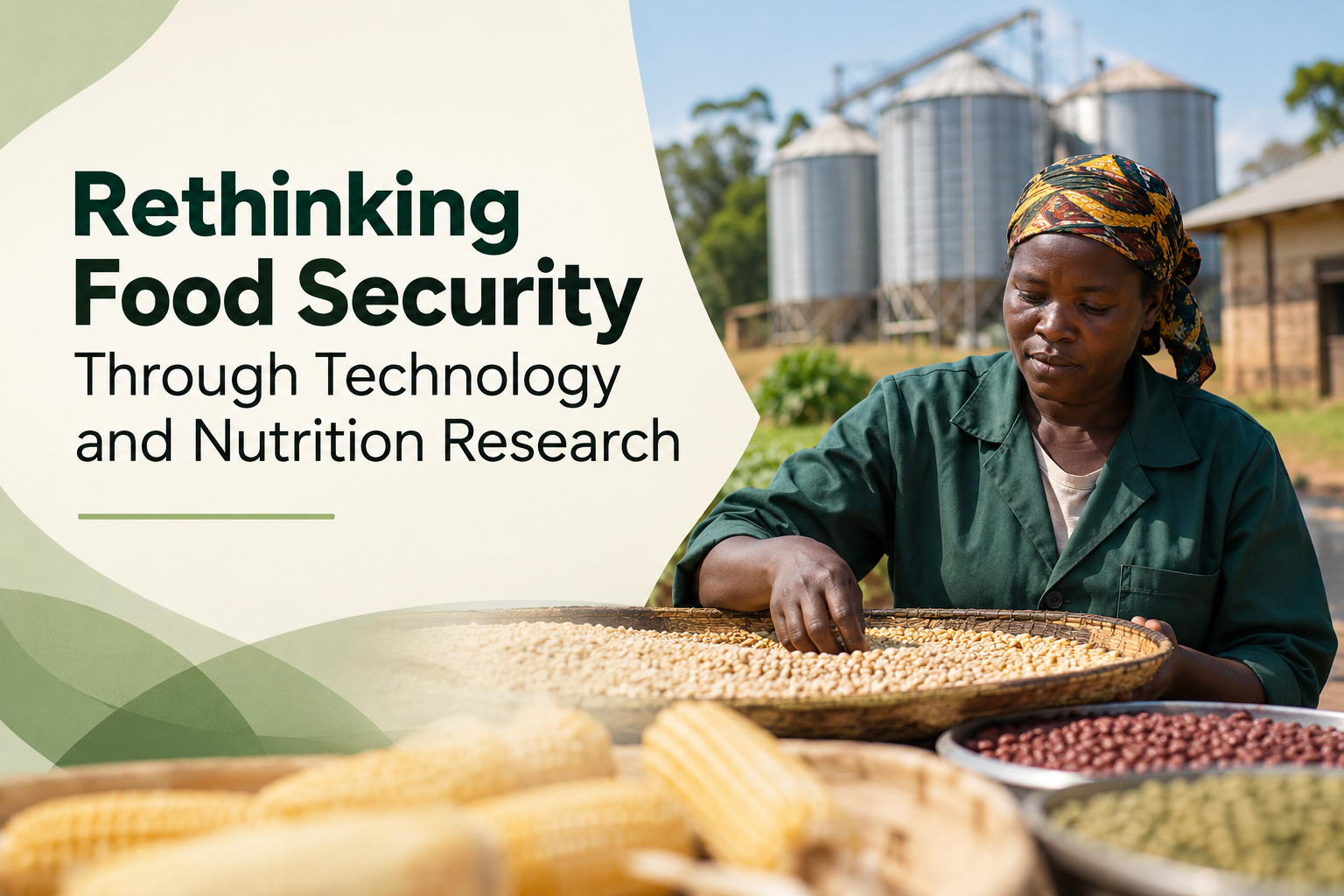
Rethinking Food Security Through Technology and Nutrition Research
28 October 2026
Busitema University has made notable contributions to agricultural innovation, including the development of a four-chamber grain storage silo designed to improve the preservation of harvested produce. Such innovations address an important challenge facing farmers in Uganda, where inadequate storage facilities can lead to food losses and reduced household income. Yet preserving more food is only one part of addressing food insecurity. Whether that food eventually contributes to better nutrition depends on several other conditions, including affordability, dietary choices and access to markets.
The relationship between technological progress and nutritional wellbeing deserves closer examination, particularly as governments and institutions invest in innovations intended to strengthen food systems. A recent case study published by Emerald Publishing offers an interesting perspective on this issue through the experience of Odisha, a state in eastern India.
Titled Digital Transformation of Food Security in Odisha: From Efficiency to Impact, the study by Rajnish Rai and Mitul Surana examines how digital reforms improved the administration of public food distribution. Odisha achieved the highest ranking in India's National Food Security Act Index following improvements in its food distribution system. However, nutritional challenges persisted despite these administrative achievements. The contrast between an efficient distribution system and continuing concerns about nutrition forms the central discussion of the study.
Odisha's experience challenges a common assumption that improvements in the delivery of public services will necessarily produce equally significant improvements in people's lives. Digital systems can make food distribution easier to monitor, improve accountability and support more efficient administration, but they cannot independently resolve every factor associated with poor nutrition. A household may receive food assistance regularly and still struggle to maintain a balanced diet, particularly when income, food choices and other living conditions limit access to nutritious meals.
This distinction introduces several possibilities for further research in Uganda. Agricultural innovation is frequently evaluated through production levels, storage capacity, reduced losses and improved processing methods. While these indicators are important, researchers could also investigate whether such improvements contribute to greater dietary diversity, better household food access and more reliable nutrition throughout the year.
Busitema University's work in agricultural storage offers a particularly interesting starting point. Researchers could examine how improved grain preservation influences household food consumption during periods of scarcity, whether reduced postharvest losses improve farmers' ability to purchase other nutritious foods, and how storage technologies affect the availability of agricultural produce in local markets. These questions would extend existing technological research into the wider social and nutritional consequences of agricultural innovation.
Another promising area lies in the relationship between food processing and household nutrition. The university's Food Incubation Center supports food processing, product development and value addition, creating opportunities to study how locally produced food products can contribute to healthier diets. Further investigations could examine the nutritional quality, affordability and consumer acceptance of processed agricultural products, particularly among communities where access to diverse foods remains a concern.
Digital technologies could also play a role in addressing some of the information gaps affecting food security interventions. Researchers in Computer Science and Engineering might investigate how mobile applications, agricultural information systems and data analytics can support the monitoring of food availability and market conditions. Such studies would benefit from considering how the information collected could be used by farmers, community organisations and institutions responsible for agricultural planning.
The questions become even more interesting when agricultural and technological research is considered alongside public health. A digital system may accurately record the quantities of food distributed within a community without providing sufficient information about the nutritional needs of individual households. Investigating these differences could encourage collaboration among Busitema University researchers in Agriculture and Animal Sciences, Health Sciences, Engineering and Management Sciences.
Uganda's rural communities offer opportunities to examine these issues under conditions that may differ considerably from those documented in Odisha. Household farming practices, seasonal changes in food availability, market accessibility and local dietary preferences all deserve attention when evaluating the effectiveness of food security interventions. Evidence gathered from such communities could help establish which technological approaches are appropriate and how their benefits might be measured more meaningfully.
The Odisha study also provides material for students developing research proposals and dissertations. Instead of concentrating exclusively on designing a digital solution, students could investigate the outcomes associated with existing technologies, explore barriers affecting their use or examine whether the intended beneficiaries experience measurable improvements. This approach would help connect academic research to the everyday circumstances of communities whose livelihoods depend on agriculture.
Scholarly publications available through Busitema University Library can support these investigations by providing access to research from different countries and disciplines. Emerald Insight, listed among the Library's electronic resources, contains studies relevant to public administration, digital transformation and development. Students and academic staff interested in food security research can consult the Odisha case alongside related literature on agricultural technologies, nutrition and the evaluation of public programmes. The university's library services can also assist researchers in locating relevant publications and developing their literature searches.
The experience documented in Odisha raises an issue that deserves continued investigation within Uganda's agricultural research community. Improving the efficiency of food systems remains important, but understanding how those improvements affect the people who depend on them is equally necessary. Research that examines both technological performance and nutritional outcomes could help Busitema University contribute further evidence on how agricultural innovation can support food security and healthier communities.
Original Publication
Rai, R., & Surana, M. (2025). Digital transformation of food security in Odisha: From efficiency to impact (A). Emerald Emerging Markets Case Studies, 15(3), 1–28.
Original article: https://doi.org/10.1108/EEMCS-11-2024-0483